


Key Insights
- Crypto crash today followed surging Treasury yields and inflation concerns.
- Bitcoin liquidations accelerated losses after the recent market rebound.
- Bitcoin ETF inflows remained positive despite falling crypto prices.
The crypto crash today pushed Bitcoin below $84,000 on Sept. 24 as U.S. bond yields surged. Major altcoins also fell after stronger economic data revived inflation fears and higher-rate expectations. CoinMarketCap showed Bitcoin near $83,500 during Thursday trading.
The selloff mattered because it reversed part of Bitcoin’s recent rebound above $86,000. It also arrived while U.S. spot Bitcoin ETFs continued taking in fresh capital. That split pointed toward macro pressure and derivatives positioning, rather than an ETF-led exit.
Crypto Crash Today Deepens as Treasury Yields Jump
CoinMarketCap data showed Bitcoin falling about 3% over 24 hours during Thursday trading. The cryptocurrency had closed Sept. 21 near $86,603 after gaining 6.73% that day. By Sept. 24, the Bitcoin price had slipped back toward $83,500.
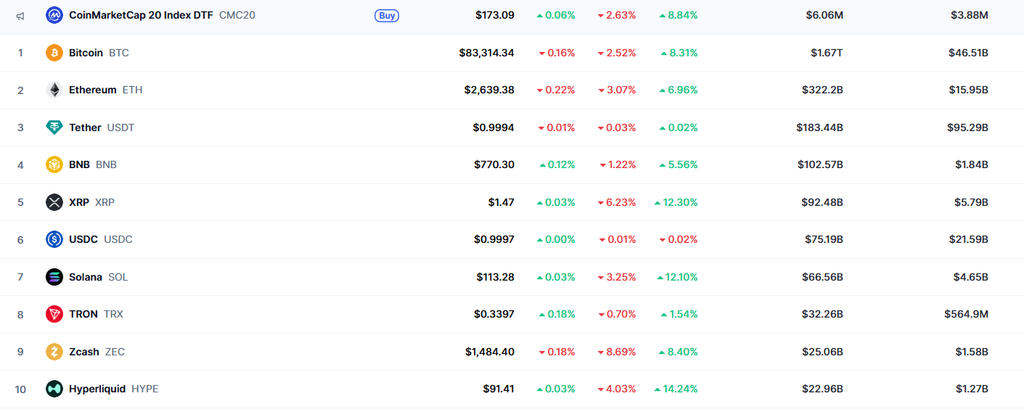
CoinMarketCap placed total crypto market capitalization near $2.84 trillion during the retreat. That represented a roughly 2.8% daily decline across the crypto market. XRP also fell about 7% to 8%, showing heavier pressure across major altcoins.
U.S. Treasury data showed the 10-year yield rising to 5.11% on Sept. 23. It stood at 4.96% one session earlier. The 30-year yield also rose to 5.40% from 5.29%.
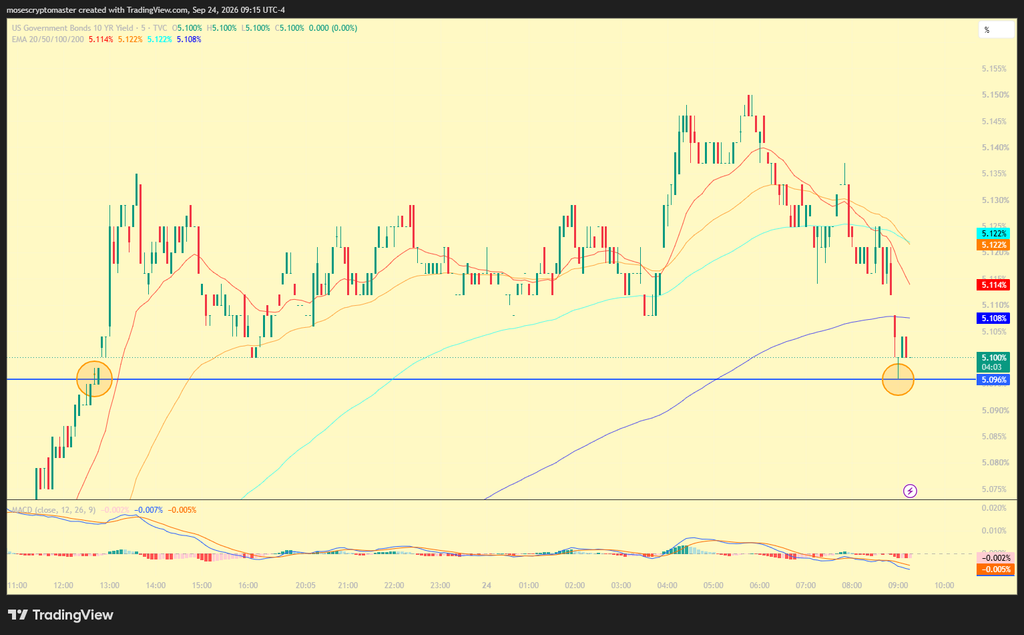
The bond move followed unexpectedly strong U.S. business activity data. S&P Global said its September Composite PMI rose to 58.4 from 56.0 in August. That was the strongest expansion since July 2021.
S&P Global economist Chris Williamson also flagged stubborn inflation pressure in the same release. Input costs rose at their fastest pace in nearly four years. Higher fuel and transport costs contributed to that increase.
That mix pushed markets toward a tighter-rate interpretation. Higher Treasury yields increase returns available on government debt and raise financing costs elsewhere. Risk assets, including crypto, often face pressure when that repricing accelerates.
Crypto Crash Today Reverses Part of Bitcoin’s Rally
The crypto market entered the selloff after a fast rebound earlier this week. CoinMarketCap showed Bitcoin closing Sept. 18 near $80,901 before reaching $86,603 three days later. That left traders exposed to a sharp reversal once macro conditions turned less supportive.
Profit-taking likely added pressure, but available data does not prove it caused the decline. The timing instead matched the Treasury selloff and hotter economic figures. S&P Global also reported the fastest U.S. employment growth in over four years.
That reduced the case for near-term policy relief. A stronger rate backdrop also increased pressure on risk-sensitive assets. Bitcoin therefore lost momentum as traders reassessed the conditions supporting this week’s rebound.
Bitcoin Liquidations Amplify Crypto Crash Today
Leverage then accelerated the move lower. CoinGlass data cited by KuCoin showed nearly $400 million in crypto positions liquidated over 12 hours. Long positions accounted for about $360 million of that total.
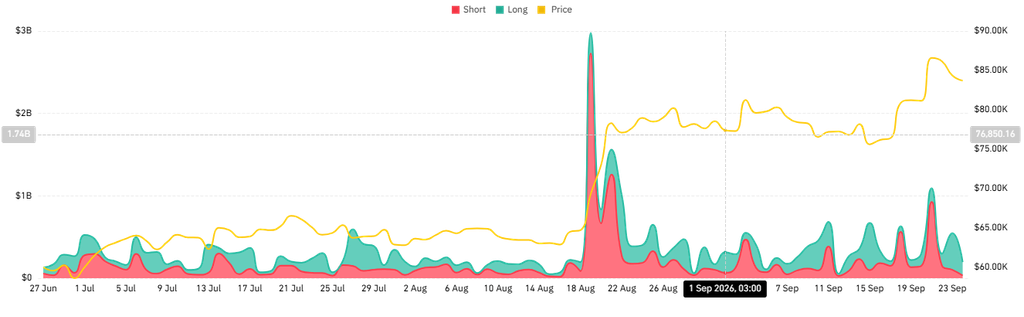
That imbalance showed how heavily traders had positioned for further gains. Forced closures can deepen an existing decline because exchanges automatically sell collateral when margin requirements fail. Altcoins can react more sharply because many trade with thinner liquidity than Bitcoin.
The derivatives washout also followed heavy short liquidations during Bitcoin’s earlier rally. That left the market vulnerable once momentum reversed. Liquidations therefore acted as an amplifier rather than the original trigger.
Bitcoin ETF Inflows Challenge the Selling Narrative
Farside Investors recorded $346.9 million in net U.S. spot Bitcoin ETF inflows on Sept. 23. BlackRock’s fund took in $166.3 million, while Fidelity’s product added $143.2 million. The funds had also attracted $714.7 million one day earlier.
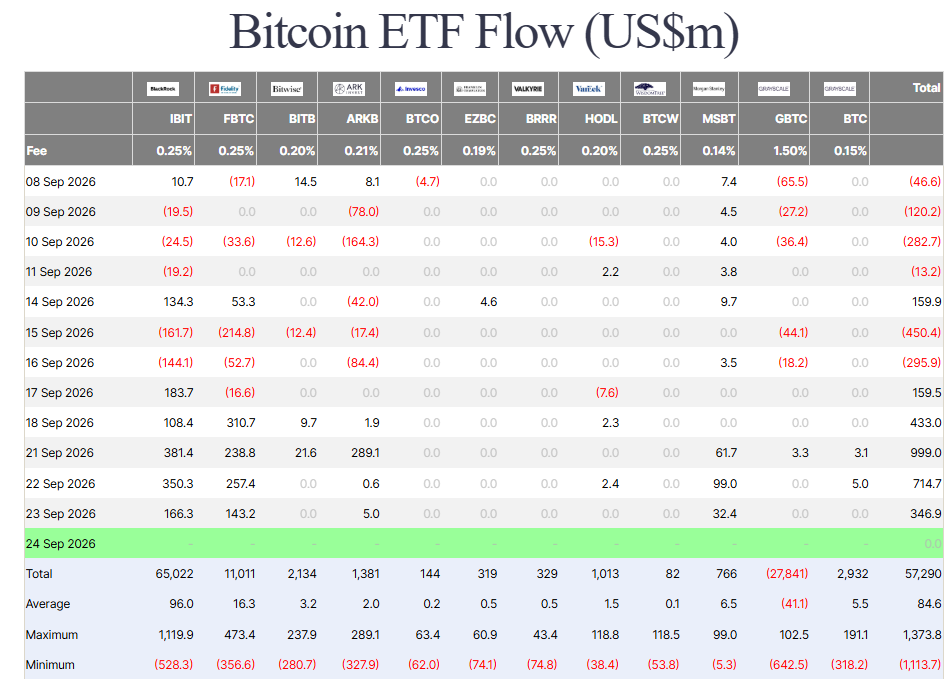
Those Bitcoin ETF inflows complicated the idea of broad institutional retreat. Bitcoin still fell despite continued demand through regulated U.S. products. Other spot sellers, derivatives traders, and macro positioning outweighed that support in the short term.
CME FedWatch derives rate probabilities from 30-Day Federal Funds futures prices. Those expectations can shift quickly when inflation or labor data surprises. Traders will therefore keep watching rate pricing alongside Bitcoin and Treasury markets.
The next major macro test arrives on Sept. 30. The Bureau of Economic Analysis will publish August Personal Income and Outlays data that morning. That release includes the Personal Consumption Expenditures price index, a key Federal Reserve inflation gauge.

Beatrice Mastropietro
Beatrice Mastropietro is a cryptocurrency and financial markets writer at CrypTocker. She covers Bitcoin, digital assets, blockchain regulation, market trends, institutional activity and financial technology. Her work focuses on research-driven reporting, clear sourcing and accurate market analysis.