
Key Insights
- Kalshi valuation could reach $40 billion under a financing nearing completion.
- The proposed valuation stands 82% above Kalshi’s confirmed May financing.
- Kalshi’s CFTC registrations and expanding derivatives business strengthen its IPO narrative.
Kalshi valuation could reach roughly $40 billion under a new private financing nearing completion. Bloomberg reported the talks on Sept. 30 as the prediction-market operator explored a future initial public offering.
The valuation would represent another rapid repricing for the private company. Kalshi last raised $1 billion at a $22 billion valuation in May 2026.
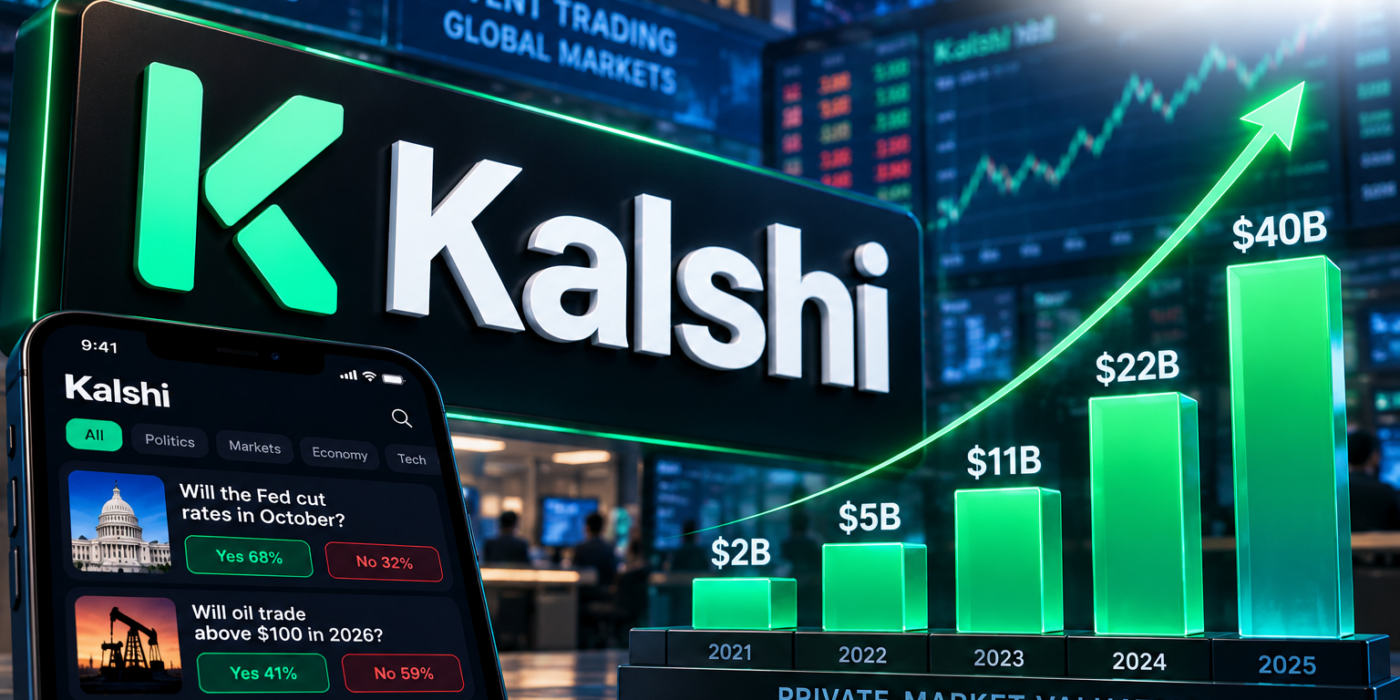
A $40 billion valuation would place Kalshi at 20 times its June 2025 valuation. The company has reached that trajectory while expanding trading volumes, institutional products and regulated derivatives infrastructure.
Kalshi Valuation Has Risen From $2B to a Proposed $40B
Kalshi’s funding history shows how quickly private investors have repriced the business.
The company raised $185 million at a $2 billion valuation in June 2025. Paradigm led the Series C, with Sequoia Capital and other investors participating.
Four months later, Kalshi raised $300 million at a $5 billion valuation. Andreessen Horowitz and Sequoia co-led the October 2025 Series D.
Kalshi then raised another $1 billion at an $11 billion valuation on Dec. 2, 2025. Paradigm led that Series E round.
The next doubling came five months later.
Kalshi announced a $1 billion Series F at $22 billion on May 7. Coatue led the financing, with Sequoia, Andreessen Horowitz, IVP and Paradigm participating.
Morgan Stanley and ARK Invest also joined the round.
A proposed $40 billion valuation would increase Kalshi’s value by about 81.8% from May. It would sit 264% above December’s valuation and 700% above October’s level.
Compared with the $2 billion Series C valuation, the proposed figure represents a 1,900% increase.
Kalshi attributed its May financing to rising institutional activity. The company said institutional trading volume had increased 800% over six months.
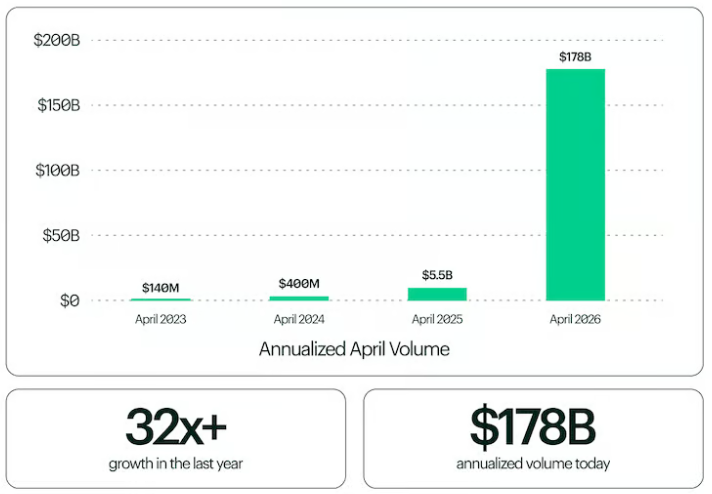
Annualized trading volume rose from $52 billion to $178 billion during that period, Kalshi said. Those figures remain company-reported rather than independently audited public financial results.
SEC Filing Shows Kalshi Had Already Sold $1.12B in Private Equity
A Securities and Exchange Commission filing provides additional context around Kalshi funding before the latest talks.
Kalshi filed a Form D on Aug. 25 covering a private equity offering. The filing listed a first-sale date of April 3, 2026.
The company reported a total offering amount of $1.50 billion. It had sold approximately $1.12 billion when it filed the notice.
The filing listed $379.99 million remaining and 71 participating investors. Kalshi claimed the Rule 506(b) exemption for the private offering.
The filing overlaps the period containing Kalshi’s May Series F. However, the document does not establish that the reported $40 billion financing has closed.
Bloomberg reported Sept. 30 that Kalshi was finalizing financing at around that valuation. The company has not announced another completed funding round matching those terms.
That distinction matters because private financing terms can move before closing.
CFTC Infrastructure Gives Kalshi IPO Story Another Dimension
Kalshi’s regulatory structure separates it from many consumer prediction platforms.
The Commodity Futures Trading Commission designated KalshiEX LLC as a designated contract market in November 2020. That status places the exchange under the Commodity Exchange Act and applicable CFTC rules.
The regulator later registered Kalshi Klear LLC as a derivatives clearing organization in August 2024. The registration permits the entity to clear futures, futures options and swaps.
In January 2025, the CFTC modified Kalshi’s designation to permit intermediated futures trading. Current CFTC records continue to list Kalshi as a designated contract market.
Kalshi has also moved beyond conventional event contracts.
On May 29, the CFTC approved BTCPERP, Kalshi’s perpetual contract referencing Bitcoin’s spot price. The regulator classified the product as a futures contract.
That expansion gives Kalshi exposure to a broader derivatives market before any potential IPO. It also makes regulatory execution more relevant to the company’s private-market valuation.
Kalshi IPO Remains Early Despite $40B Valuation Talk
The IPO element remains less developed than the financing story.
Kalshi is still privately held, and investors cannot currently buy publicly listed Kalshi stock. No public offering price, ticker or listing exchange has been announced.
The Sept. 30 Bloomberg report tied the new financing discussions to preparations for a future IPO. Earlier public comments from Chief Executive Officer Tarek Mansour indicated that Kalshi was considering a listing but not during 2026.
Regulatory exposure will likely remain part of that process.
In February, the CFTC’s Division of Enforcement issued a prediction-markets advisory after two cases involving Kalshi contracts. The cases covered misuse of nonpublic information and trading tied to outcomes a participant could influence.
In one case, Kalshi imposed a five-year suspension and a $2,246.36 penalty. The CFTC used the cases to remind exchanges and traders that prediction markets remain subject to federal commodities law.
That oversight creates a different risk profile from a conventional software IPO.
The next measurable development is completion of the latest financing. An official Kalshi announcement would establish the final valuation, amount raised and participating investors.
Any eventual public offering would require further disclosure before investors receive a confirmed ticker, share price or listing date.

Moses
Moses is a crypto journalist and market analyst at CrypTocker covering Bitcoin, digital assets, exchange-traded funds, regulation, institutional activity and financial markets. His reporting focuses on market data, on-chain trends, regulatory developments and financial technology.